

From Diplomacy to Executive Economy: Algeria and Chad Build Productive Partnerships
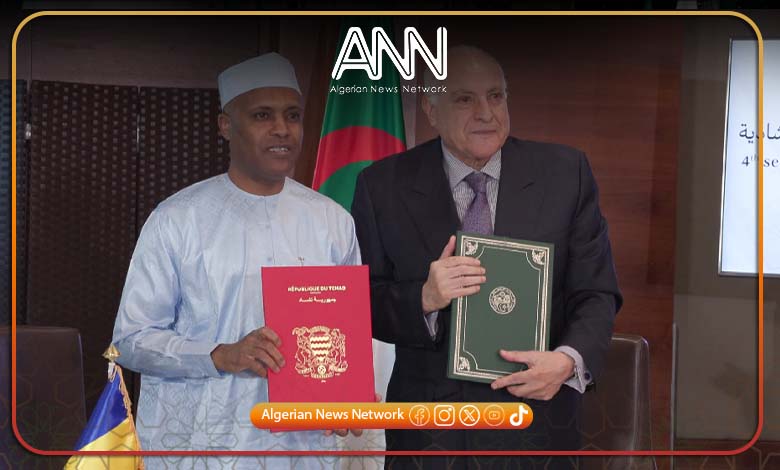
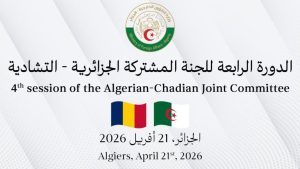
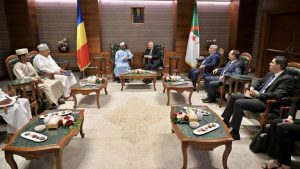
Algiers — April 21, 2026 The visit of Chadian President Mahamat Idriss Déby Itno to Algeria marked a turning point in bilateral relations, shifting focus from diplomatic dialogue to concrete economic cooperation. On April 21, the two countries signed the minutes of the fourth session of the Joint Governmental Committee, alongside investment and energy meetings that underscored a new phase: moving from intentions to executable projects
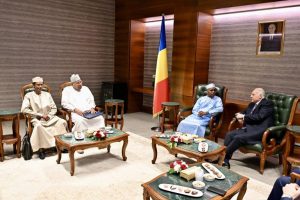
This parallel track between diplomacy and economics is no longer symbolic. It reflects a new structure of cooperation where economic institutions advance in step with political decision-making, ensuring project follow‑up and a practical roadmap for partnership.
Energy as the Fastest Gateway
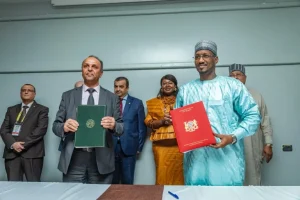
The hydrocarbons sector has emerged as the quickest bridge between the two nations. In January 2026, three agreements were signed in N’Djamena during the SEMICA Chad 2026 exhibition, giving immediate economic depth to cooperation. These agreements go beyond exploration, extending to resource development, value creation, and capacity building—positioning Algeria not only as a political ally but as a technical and institutional partner in Chad’s market.
Logistics as a Complementary Dimension
The inauguration of the Algiers–N’Djamena air route in October 2025 was another practical step, reducing costs and facilitating business mobility. More than a transport service, this route is an infrastructure for economic integration, accelerating the movement of investors and experts and strengthening institutional interaction.
A Continental Vision
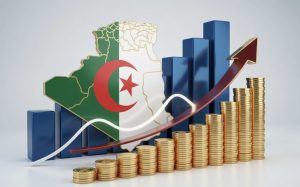
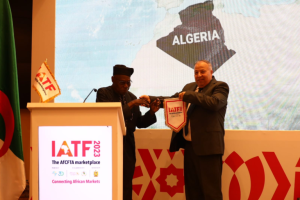
This trajectory aligns with Algeria’s broader South–South partnerships. Hosting the Intra-African Trade Fair in 2025 showcased Algeria’s ambition to expand its commercial footprint across the continent. The figures recorded during that event confirm that rapprochement with Chad is part of a wider strategy to reposition Algeria economically within Africa.

Beyond Symbolism
The timing of President Déby’s visit is strategic, following sectoral agreements, air connectivity, and institutional mechanisms. This sequence demonstrates that cooperation is no longer seasonal or circumstantial, but built on tools of agreement, execution, and monitoring—giving it durability.
From a purely economic perspective, the sectors highlighted reveal shared priorities: hydrocarbons and mining signal productive investment, while air connectivity supports trade and human mobility. Coordination between investment bodies reflects the effort to transform political rapprochement into measurable projects.
Challenges Ahead
Despite progress, the challenge remains in the speed of implementation and the scale of tangible results. Current indicators show stronger tools and frameworks, but less evidence yet in trade flows and investment volumes. The present stage is therefore about building the foundation, with its impact to be measured by how agreements translate into real projects and economic exchanges.
In essence, Algeria and Chad are entering a phase defined by executive economy rather than diplomatic courtesy. If this pace continues, their relationship could evolve into a fully integrated economic partnership within the African continent.

Related posts
Bendjama rejects attempts to bypass Sahrawi Self-determination at UN

Didouche Mourad..The youngest of the six historic leaders of Algeria’s revolution
Algeria’s upper house unanimously approves army deployment to Niger
Tebboune: Algeria Respected for Independent Foreign Policy and Regional Peace Role
Bendouda Calls for Cultural Sovereignty at Saint Petersburg Forum
Attaf, Boulos discuss Algeria-US relations and regional issues
Air algérie launches direct Algiers-Berlin route