
Algeria’s Rhourde El Rar Gas Field Strengthens Its Role in North Africa’s Energy Map
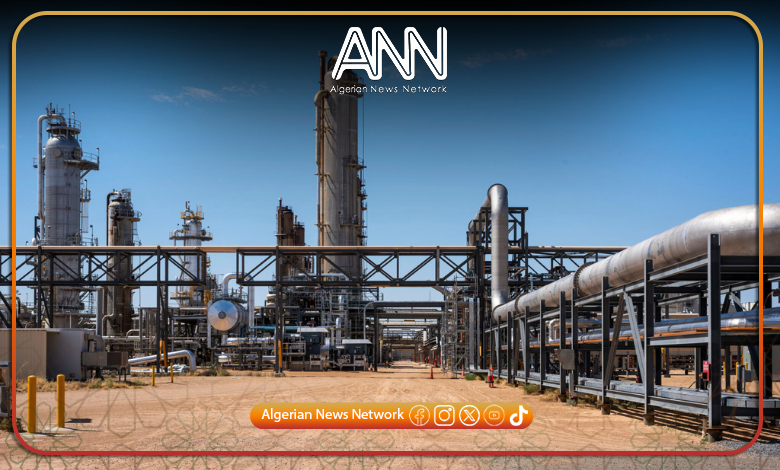
Algeria’s Rhourde El Rar gas field is back in focus as energy analysts look again at the scale of its reserves and its position inside a wider cross-border geological system linked to Libya’s Wafa field.
The field, located in Illizi province in the south-east of the country, is part of Algeria’s long-established gas production network operated by state energy company Sonatrach. It remains one of the country’s older producing assets still in active development.
Official estimates place its reserves at around 132 billion cubic meters of natural gas.
A shared reservoir beneath the desert
What sets Rhourde El Rar apart is not just its production history, but its geology.
Technical studies including work dating back to U.S. assessments in the mid-2000s suggest that the field forms part of a larger reservoir system extending across the border into Libya’s Wafa field. Both sit within the Ghadames Basin, one of North Africa’s most resource-rich hydrocarbon regions.
That overlap means the reservoir behaves as a single underground system, even though it is divided politically between two countries.
For engineers, that creates familiar but sensitive questions: how to manage pressure, how to avoid uneven extraction, and how to coordinate long-term output without damaging recovery rates.
Production and development work
Rhourde El Rar has been producing since 1980, the year of its discovery, and has gone through several phases of expansion since then.
In recent years, Sonatrach has invested in upgrading processing and compression facilities, aiming to stabilise output and improve efficiency across the wider Illizi basin.
A development programme involving international contractors helped lift production capacity significantly, moving output from lower historical levels to around 24–25 million cubic meters of gas per day in peak phases.
By 2022, the field was producing roughly 724 million cubic feet per day, accounting for about 5 percent of Algeria’s total gas output, according to industry estimates.
Investment and emissions upgrades
Alongside production growth, Algeria has pushed for technical upgrades aimed at reducing emissions and improving operational performance.
New processing units and modernisation work have been introduced in phases, including projects focused on gas compression, separation systems, and energy efficiency.
In 2022, Sonatrach also awarded additional contracts for facility upgrades that include emissions reduction technologies, reflecting wider pressure on gas producers to improve environmental performance while maintaining supply.
The Libya link … Wafa field
Across the border in south-west Libya, the Wafa field forms the other side of the same geological structure.
Operated by Mellitah Oil & Gas, a joint venture between Libya’s National Oil Corporation and Italy’s Eni, Wafa produces both oil and associated gas. Part of its output is transported through the Greenstream pipeline toward the Mediterranean coast.
However, development at Wafa has repeatedly been affected by Libya’s political instability, with interruptions to maintenance and expansion projects over the past decade.
Despite this, the geological connection between Wafa and Rhourde El Rar has remained well established among energy specialists.
Why the Ghadames Basin matters
Both fields sit inside the Ghadames Basin, which stretches across Algeria, Libya and Tunisia.
The basin covers roughly 390,000 square kilometres and is estimated to contain around 50 trillion cubic feet of natural gas, along with significant oil reserves.
It is one of the key hydrocarbon provinces in North Africa, and one where cross-border reservoirs are not unusual.
A question of coordination, not just production
The overlap between Rhourde El Rar and Wafa is not just a geological detail. It affects how both countries think about production strategy.
Without coordination, extraction on one side can influence pressure and recovery on the other. That is why technical cooperation data sharing, reservoir modelling, and production alignment is often discussed in industry circles.
A framework agreement signed in 2018 between Sonatrach and Libya’s National Oil Corporation aimed to update earlier studies and improve understanding of the shared reservoir system.
Strategic weight for Algeria and Libya
For Algeria, Rhourde El Rar is a mature but still valuable asset that supports domestic supply and export commitments.
For Libya, the wider basin offers long-term potential that has been only partially developed due to years of instability.
Together, the two fields sit inside a larger regional energy system that is becoming more relevant as global gas markets shift and demand for relatively nearby suppliers increases.
For now, the Rhourde El Rar–Wafa connection remains more technical than political. But it is also a reminder that in North African energy, borders on the surface rarely match what lies underground.

Related posts
Bendjama rejects attempts to bypass Sahrawi Self-determination at UN
Didouche Mourad..The youngest of the six historic leaders of Algeria’s revolution
Algeria’s upper house unanimously approves army deployment to Niger
Tebboune: Algeria Respected for Independent Foreign Policy and Regional Peace Role
Bendouda Calls for Cultural Sovereignty at Saint Petersburg Forum
Attaf, Boulos discuss Algeria-US relations and regional issues
Air algérie launches direct Algiers-Berlin route