

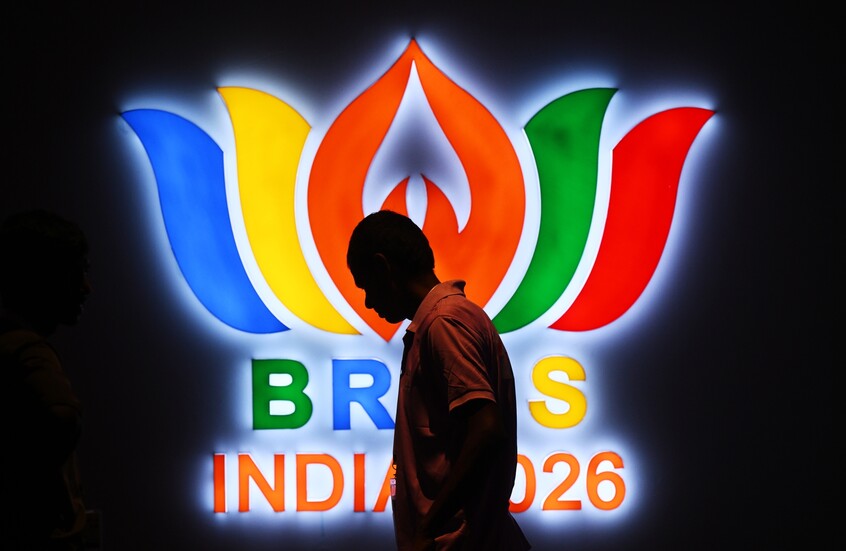
BRICS Summit: Economic ambitions rise amid global tensions
The BRICS summit is being held this year amid a significant expansion of the bloc, which has grown from its original five members to ten following the accession of Egypt, Ethiopia, Indonesia, Iran, Saudi Arabia and the United Arab Emirates, alongside a broader group of partner and dialogue countries.
The summit is bringing together a number of leaders from member states, including Russian President Vladimir Putin, Chinese President Xi Jinping, Iranian President Masoud Pezeshkian, South African President Cyril Ramaphosa, Egyptian President Abdel Fattah El-Sisi, Indonesian President Prabowo Subianto, Ethiopian Prime Minister Abiy Ahmed and Abu Dhabi Crown Prince Mohammed bin Zayed, as well as other international officials.
The summit comes amid growing geopolitical tensions worldwide, as the Strait of Hormuz crisis enters its sixth month, while the international economy continues to feel the impact of trade policies and tariffs introduced by the US administration.
Economic and Financial Agenda
Trade, digital technology, financing, energy security and reform of global governance are among the key issues on the summit’s agenda.
BRICS leaders are also expected to discuss strengthening supply chains, developing cross-border payment systems and expanding the use of national currencies in trade. Other priorities include supporting small and medium-sized enterprises, advancing artificial intelligence, enhancing energy security and expanding the role of the New Development Bank.
Speaking at the BRICS Business Forum held on the sidelines of the summit, Russian President Vladimir Putin said BRICS countries now account for more than 40 percent of global GDP, compared with around 29 percent for the Group of Seven. He also said BRICS members had contributed more than half of global economic growth over the past five years.
The summit is expected to conclude with the adoption of a joint declaration outlining the member states’ positions on a range of international and regional issues, while reaffirming their commitment to strengthening cooperation within the bloc across political, security and economic spheres.

Related posts
At President Tebboune’s invitation, 100 American tourists to discover Algeria from november 9 to 15
Bendjama rejects attempts to bypass Sahrawi Self-determination at UN
Chanegriha inaugurates new military unit headquarters in Algeria’s 3rd military region
Tebboune: Algeria pays nearly 12 billion DZD in wildfire compensation
Tebboune: Algeria Respected for Independent Foreign Policy and Regional Peace Role
Tebboune meets algerian scientific diaspora council to advance national development
Attaf:Al-Quds status is a matter of justice and international legitimacy